Public procurement has changed, and 2026 is the first full year in which many suppliers will be dealing with the new regime in practice.
For small and medium-sized businesses, this matters. Public sector contracts can be a valuable source of stable work, but tendering can feel difficult if the rules, portals and terminology keep changing.
The good news is that many of the changes are intended to make procurement more transparent, more accessible and easier for suppliers to track. The challenge is that SMEs still need to be prepared. More visibility does not automatically lead to more wins. You still need to find the right opportunities, understand the buyer’s requirements and submit strong, compliant tender responses.
This guide explains the main public procurement changes SMEs should understand in 2026, and what they mean in practical terms when bidding for public sector contracts.
Public procurement changed under the Procurement Act
The Procurement Act 2023 introduced a new public procurement regime, with the main rules taking effect from 24 February 2025.
For suppliers, the Government’s short guide to the Procurement Act 2023 is a useful starting point. It explains that the changes are intended to simplify procurement and benefit suppliers of all sizes, including small businesses, start-ups and social enterprises.
In practical terms, SMEs are likely to notice changes in areas such as:
- Where opportunities are advertised
- How supplier information is stored and reused
- More published notices across the procurement lifecycle
- Different procurement procedures
- Dynamic markets replacing dynamic purchasing systems
- More visibility of future pipelines
- Stronger transparency around contract performance and payments
- Greater focus on supplier readiness and evidence
The rules are important, but SMEs do not need to become procurement lawyers to compete. The priority is to understand what has changed enough to prepare better, search more effectively and respond more confidently.
Old and new rules may still appear
One confusing point for suppliers is that not every public contract in 2026 will look the same.
Some procurements started before the new regime came into force, and those may continue under the previous rules. Others will be run under the Procurement Act 2023. You may still see familiar terms from older procurement regulations alongside newer language from the Act.
This means SMEs should avoid assumptions.
When reviewing a tender, check:
- Which procurement regime applies
- The tender notice and procurement documents
- The procedure being used
- The submission route
- The evaluation criteria
- Any terminology around frameworks, dynamic markets or notices
- The buyer’s specific instructions
The tender documents should tell you what process is being followed. If something is unclear, use the clarification process rather than guessing.
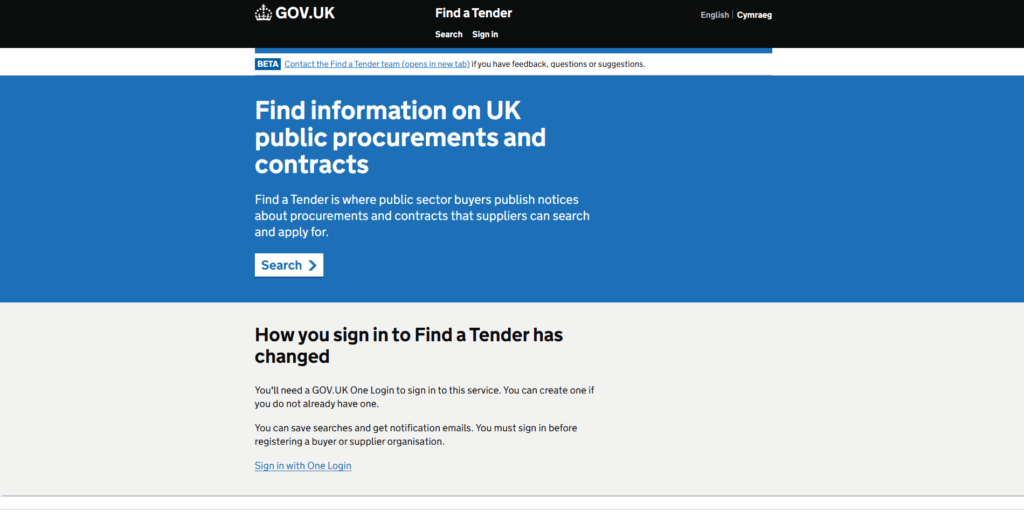
Find a Tender is more important
The enhanced Find a Tender service is now the central digital platform for public procurement.
For SMEs, this is one of the most practical changes. Find a Tender is not only a place to search for higher-value notices. It is also part of the system used to support transparency and supplier information under the new regime.
Suppliers can use Find a Tender to search for opportunities, set up alerts and manage supplier information.
This matters because SMEs often miss opportunities simply because they are not searching in the right place or using the right keywords.
A good search process should include:
- Find a Tender alerts
- Relevant regional procurement portals
- Buyer procurement pages
- Framework provider websites
- Sector-specific portals, where relevant
- Market engagement notices
- Pipeline notices
- Existing customer and target buyer updates
Do not rely on one keyword. Buyers may describe the same service in different ways. For example, a training provider might search for “training”, “learning and development”, “workforce development”, “facilitation”, “coaching” and sector-specific terms.
Supplier information can be reused more easily
One of the aims of the central digital platform is to make supplier information easier to manage and reuse.
For SMEs, this should reduce some of the repeated admin involved in public sector tendering. Core supplier details can be stored and updated more efficiently, which should make it easier to respond to opportunities.
However, this does not remove the need for good preparation.
Suppliers should still keep key information current, including:
- Company registration details
- Insurance levels
- Financial information
- Policies and procedures
- Accreditations
- Case studies
- Contact details
- Responsible staff
- Standard declarations
- Social value examples
- Environmental information
If your core information is out of date, incomplete or inconsistent, it can still slow the process down. Treat supplier registration as part of bid readiness, not a one-off admin task.
Our Bid Ready support can help SMEs organise the information, documents and evidence needed before the next tender lands.
Pipeline notices give earlier visibility
One helpful change for suppliers is greater visibility of future procurement plans.
Under the new regime, certain contracting authorities are required to publish pipeline notices. These are intended to give suppliers a view of planned procurements over the coming reporting period.
For SMEs, this can be valuable because it gives more time to prepare.
A pipeline notice may help you:
- Spot future opportunities before they become live tenders
- Identify target buyers
- Plan internal resources
- Prepare policies and evidence
- Build relevant case studies
- Attend market engagement
- Decide whether a future opportunity is worth tracking
- Consider partnerships or subcontracting routes
The important point is that pipeline notices are not the tender itself. They are an early signal. Details can change, and the buyer is not always committed to proceeding exactly as described.
Still, SMEs should monitor pipeline information carefully. A few extra months of preparation can make a major difference to the quality of a bid.

Market engagement is worth watching
Public sector buyers may use early market engagement to understand the supplier market before launching a procurement.
This might include:
- Supplier days
- Market engagement notices
- Request for information exercises
- Soft market testing
- Webinars
- Early discussions around scope
- Feedback on draft requirements
- Pipeline engagement
For SMEs, this is an opportunity to learn, not to sell aggressively.
Market engagement can help you understand:
- What the buyer is trying to achieve
- Whether the contract is likely to be split into lots
- Which requirements may be mandatory
- Whether the opportunity is suitable for SMEs
- What evidence the buyer may expect
- Likely timescales
- Potential risks or barriers
It can also help buyers understand what SMEs can offer. If a future contract looks too large or restrictive, market engagement may be the stage where suppliers can explain how smaller lots, realistic requirements or clearer specifications could improve competition.
Dynamic markets create different access routes
Dynamic markets are a newer commercial tool under the Procurement Act.
They are similar in some ways to dynamic purchasing systems, but are part of the new regime. The Government’s guidance on dynamic markets explains that they are lists of qualified suppliers who can participate in future procurements under that market.
For SMEs, the key benefit is that dynamic markets remain open to new suppliers. That means you are not necessarily locked out for years if you miss the first opportunity to join.
However, joining a dynamic market is not the same as winning a contract. You may still need to compete for specific opportunities under that market.
When reviewing a dynamic market, check:
- What goods, services or works it covers
- Whether it is split into parts or categories
- Conditions for membership
- Evidence required to join
- How future competitions will be run
- Whether there are fees
- Which buyers can use it
- How long the market will operate
- Whether you need to join before bidding for a specific opportunity
Dynamic markets can be useful, but only if they fit your services and target buyers.
Frameworks are still important
Framework agreements remain a major route to public sector work.
The Procurement Act also introduced open frameworks, which are designed to make some framework arrangements more accessible over time. The Government’s guidance on frameworks explains how frameworks and open frameworks sit within the new regime.
For SMEs, the practical message is that frameworks still need a strategy.
Getting onto a framework can create access to future call-offs, but it does not guarantee revenue. You may still need to compete through further competitions, respond to buyer requests, market your framework place and track opportunities carefully.
Before bidding for a framework, ask:
- Is this framework used by buyers we want to work with?
- Are the lots suitable for SMEs?
- Can we meet the entry requirements?
- Do we understand how call-offs will work?
- Is the likely return worth the bid effort?
- What will we do after award to win actual work?
A framework place is useful only if you can turn it into contract opportunities.

Procurement thresholds changed in 2026
From 1 January 2026, revised procurement threshold amounts apply to procurements that commence on or after that date. These thresholds affect which rules apply to different types of contract.
For many SME bidders, the exact threshold will matter less than the practical question: what process is the buyer using and what are the requirements?
However, thresholds can still influence:
- Whether a contract is treated as above threshold
- Which notices are published
- The procedure used by the buyer
- The level of competition
- The documentation required
- Whether the full regime applies
If you are bidding for public sector work in 2026, check the tender notice and instructions rather than relying on older assumptions.
Below-threshold contracts still matter
Not every useful opportunity will be a large above-threshold tender.
Many SMEs build public sector experience through smaller contracts, quotations, local authority opportunities, school contracts, NHS trust requirements or specialist low-value work.
Below-threshold contracts can still be valuable because they may:
- Be more accessible for smaller suppliers
- Have shorter response requirements
- Help build public sector evidence
- Create local relationships
- Lead to future opportunities
- Support case studies for larger tenders
Do not ignore smaller opportunities simply because they are not high profile. A well-chosen lower-value contract can be an excellent route into a buyer or sector.
The key is to be selective. A small contract still needs to be profitable, deliverable and worth the effort.
Payment transparency and prompt payment matter
Payment has been a major theme in public procurement reform.
Public contracts now include 30-day payment terms, and prompt payment requirements extend through the supply chain in relevant circumstances. This is important for SMEs, especially those subcontracting to larger suppliers.
There are also newer transparency requirements around payments under public contracts. For suppliers, this may make payment behaviour more visible and encourage better discipline across public sector supply chains.
In practical terms, SMEs should:
- Understand payment terms before bidding
- Check invoicing requirements
- Clarify approval processes
- Keep accurate delivery and timesheet records
- Raise payment issues early
- Make sure subcontract terms are clear
- Monitor cashflow impact before accepting a contract
Winning a public contract is only useful if the commercial terms work for your business.

Performance is becoming more visible
Contract performance is another important area.
For certain contracts, buyers may need to set key performance indicators and publish contract performance notices. This means supplier performance can become more visible after award.
For SMEs, this has two implications.
First, strong delivery can support future bids. If you perform well, you should keep records, gather feedback and turn outcomes into case studies.
Second, poor performance can create longer-term problems. If issues are serious enough to be published, they may affect buyer confidence in future procurements.
Before bidding, check whether you can realistically deliver the KPIs and service levels. Do not treat performance measures as an afterthought.
Ask:
- Are the KPIs achievable?
- Do we have the systems to monitor them?
- Who will manage reporting?
- What happens if performance drops?
- Are service credits or deductions included?
- Does the price allow for the required level of management?
- Can we evidence similar performance elsewhere?
Bid writing and contract delivery are connected. Do not promise a performance model that your team cannot maintain.
Social value and public benefit remain important
Public procurement is not only about price.
Buyers are often expected to consider wider outcomes, including value for money, public benefit, social value, environmental impact, economic growth, local priorities and supplier resilience.
For SMEs, this can be an opportunity. Smaller businesses can often show local employment, community links, supply chain benefits, flexibility and senior involvement.
However, social value still needs to be specific and realistic.
Avoid vague promises such as:
“We will support the local community wherever possible.”
Use clear commitments instead:
- What will you do?
- Who will deliver it?
- When will it happen?
- Who will benefit?
- How will it be measured?
- How will it be reported?
A practical, proportionate commitment is usually stronger than a long list of ambitious promises that cannot be evidenced.
What SMEs should do now
The procurement changes create more visibility and potentially more opportunity, but suppliers still need to be ready.
A practical 2026 action list for SMEs would include:
- Register and update supplier information on Find a Tender
- Set up opportunity alerts using several keyword variations
- Track target buyers and pipeline notices
- Monitor frameworks and dynamic markets in your sector
- Review your bid or no bid process
- Update core policies and certificates
- Build a case study bank
- Prepare evidence for quality, social value and performance questions
- Review payment and cashflow risks before bidding
- Learn from tender feedback
- Keep a simple tracker of live and future opportunities
This preparation makes it easier to respond quickly when the right tender appears.
Our bid writing services can support SMEs with live public sector tenders, while our AI-assisted bid writing service can help produce structured first drafts when deadlines are tight.

A 2026 procurement checklist for SMEs
Before bidding for a public sector opportunity in 2026, ask:
| Check | Question |
|---|---|
| Rules | Do we know which procurement regime and procedure applies? |
| Portal | Are we registered on the correct platform? |
| Fit | Does the opportunity match our services and evidence? |
| Compliance | Can we meet all mandatory requirements? |
| Notices | Have we checked pipeline or market engagement information? |
| Route | Is this an open tender, framework, dynamic market or call-off? |
| Evidence | Can we prove similar delivery and performance? |
| Social value | Are our commitments realistic and measurable? |
| Payment | Do the terms work for our cashflow? |
| Performance | Can we deliver and report against the KPIs? |
| Submission | Can we complete, review and submit on time? |
This checklist will not replace a full tender review, but it can help SMEs make better early decisions.
When to get support with procurement changes
You may benefit from bid writing support if:
- You are unsure how the new procurement rules affect your tender
- You need help deciding whether an opportunity is worth bidding for
- You are new to Find a Tender, frameworks or dynamic markets
- You have strong delivery experience but limited tender evidence
- The quality questions are complex
- The deadline is short
- You need a review before submission
- You want to prepare standard bid documents for future opportunities
At Bid Writer Consultancy, we help SMEs understand tender requirements, organise their evidence and write clearer, more competitive public sector bids. We can support with opportunity reviews, bid writing, bid reviews, urgent deadlines and bid readiness.
If you are preparing for public sector tenders in 2026, contact Bid Writer Consultancy. We can help you understand what the buyer is asking for, decide how to respond and prepare a stronger submission.
Procurement changes create opportunity, but preparation still wins
The public procurement landscape is changing, but the fundamentals of good bidding remain the same.
Find the right opportunities. Read the tender documents carefully. Check compliance. Understand the scoring. Use strong evidence. Keep commitments realistic. Submit on time.
For SMEs, the changes in 2026 should make it easier to see opportunities and understand parts of the procurement process. But visibility is only the starting point. Winning still depends on choosing the right tenders and submitting responses that give buyers confidence.
If your business wants to win more public sector work this year, now is the time to prepare your documents, evidence and bid process before the next opportunity appears.